 MOHANCAD
MOHANCAD
MOHANCAD
Precision mechanical design and manufacturing-ready CAD solutions for modern industrial material handling systems.
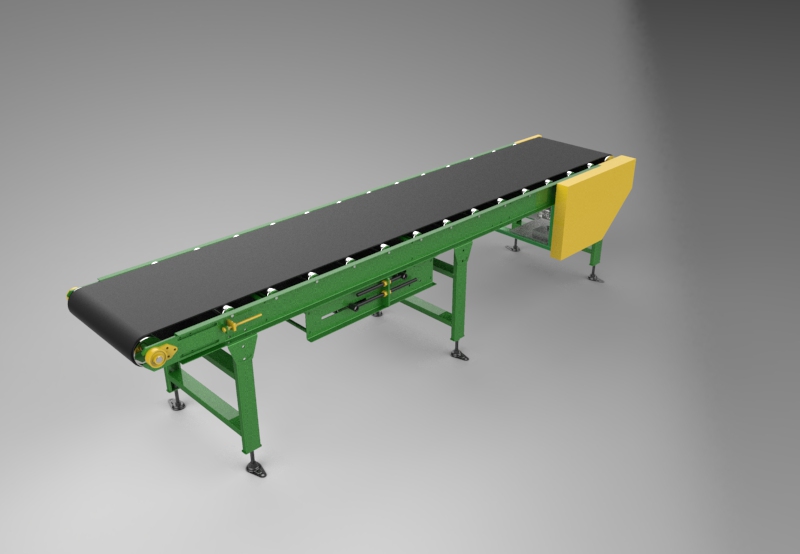
The Industrial Conveyor Machine is designed for continuous and efficient transportation of materials, components, boxes and products within manufacturing and production environments.
The system combines a strong structural frame, conveyor belt, rollers, shafts, bearings, motor and gearbox to provide smooth, reliable and controlled material movement.
ENGINEERING DETAILS
Rigid structural frame designed to provide stability, strength and reliable support during continuous operation.
Motor and gearbox arrangement designed to deliver controlled speed and sufficient torque for conveyor movement.
Drive and idler rollers are positioned for smooth belt movement and stable material transportation.
Adjustable guide rails help maintain product alignment throughout the conveyor travel path.
Mechanical components are arranged for easier inspection, servicing and replacement during maintenance.
Protective guards are incorporated around critical moving components to improve machine safety.
CONVEYOR ASSEMBLY
Heavy-duty supporting structure designed to carry the conveyor system and withstand operating loads.
Continuous belt system used to transport materials, components and products between workstations.
Powered roller responsible for transferring rotational motion to the conveyor belt.
Supporting rollers that maintain belt position and provide smooth movement along the conveyor.
Rotating shaft that transfers mechanical power from the drive system to the conveyor roller.
Provides the primary rotational power required to operate the conveyor system.
Reduces motor speed and provides suitable output torque for the conveyor drive mechanism.
Support rotating shafts while reducing friction and maintaining smooth mechanical operation.
MECHANICAL DESIGN PROCESS
The Industrial Conveyor Machine is developed with a complete mechanical design approach, starting from the initial concept and layout through detailed CAD modeling and manufacturing documentation.
Every major mechanical component is designed and integrated to achieve proper fit, functionality, manufacturability and easy maintenance.
Develop the initial machine concept according to application and operating requirements.
Define conveyor length, width, height, product flow and overall machine arrangement.
Design a rigid supporting structure for stability and reliable machine operation.
Develop drive rollers, idlers and shafts with suitable mechanical arrangements.
Arrange motor, gearbox, shaft and drive roller for efficient power transmission.
Build the complete machine assembly and verify component positioning and fit.
Check component clearances, movement and assembly interference before manufacturing.
Prepare detailed drawings, dimensions, specifications and bill of materials.
HOW THE MACHINE WORKS
The conveyor system uses an electric motor to generate rotational power. This power is transferred through the gearbox and drive shaft to the drive roller.
As the drive roller rotates, friction between the roller and conveyor belt produces continuous belt movement. Materials placed on the belt are then transported along the required production path.
Generates rotational power.
Controls speed and torque.
Transfers mechanical power.
Transfers motion to the belt.
Moves continuously.
Transports the product.
INDUSTRIAL USE CASES
Industrial conveyor systems can be integrated into different production and material-handling environments. The machine helps move products efficiently between workstations, processes and storage areas.
Continuous transportation of components and products between different manufacturing operations.
Material and component movement across automotive assembly and production lines.
Efficient movement of packed products through filling, sealing, inspection and packaging stages.
Transfers components and assemblies between sequential production workstations.
Helps transport boxes, packages and materials within warehouse and distribution facilities.
Conveyor-based transportation for suitable food processing and packaging operations.
Controlled movement of products and containers through selected pharmaceutical processes.
Can be integrated with automated production systems for continuous material transportation.
FINAL DESIGN OUTPUT
The final project package can include detailed 3D CAD models, complete machine assembly, manufacturing drawings, exploded views and structured engineering documentation.
Detailed 3D CAD models of individual conveyor components prepared according to design requirements.
Fully integrated conveyor machine assembly with proper component positioning and mechanical relationships.
Dimensioned engineering drawings containing required views, dimensions, tolerances and manufacturing details.
Clear exploded assembly representation for component identification, assembly and maintenance reference.
Structured BOM listing machine components, quantities and relevant part information.
Organized engineering files prepared to support fabrication, assembly and production requirements.
Detailed engineering drawings and CAD views of the Industrial Conveyor Machine.
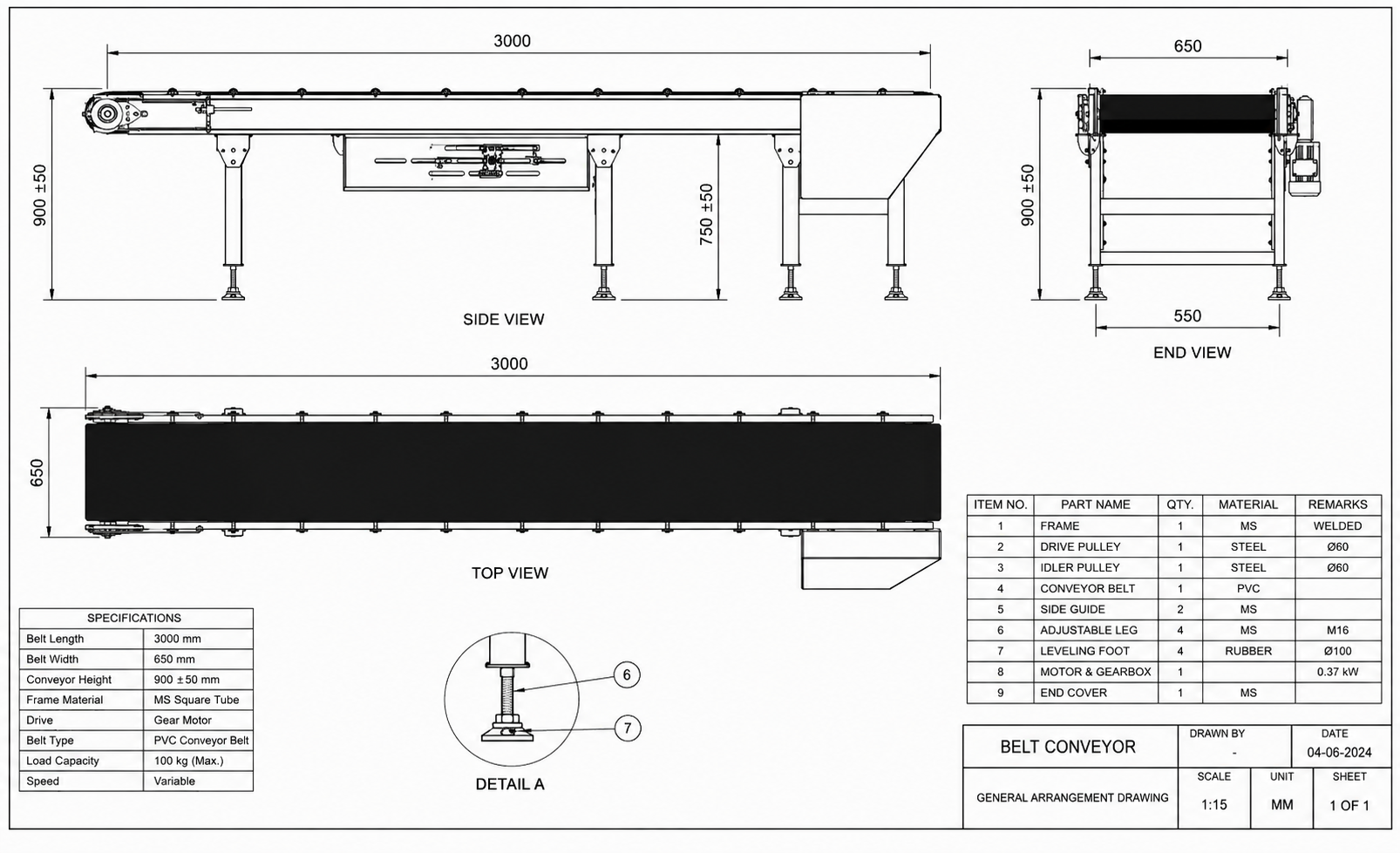
Detailed dimensioned engineering drawing
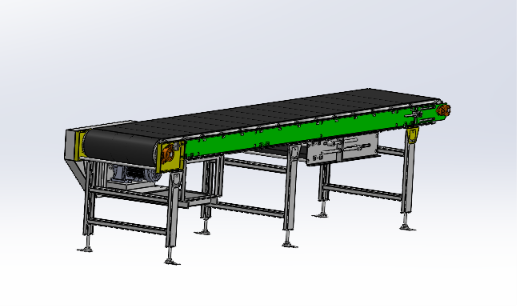
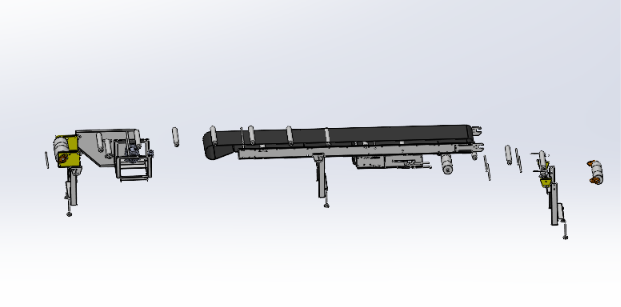
Key engineering considerations addressed during the Industrial Conveyor Machine design process.
The conveyor machine was designed with a focus on structural strength, smooth material movement, reliable power transmission and easy maintenance.
DESIGN FOCUSStrength • Precision • Reliability • Maintenance
Designed a rigid machine frame capable of supporting continuous operating loads.
Roller positioning and alignment were considered to maintain stable and smooth belt movement.
Motor, gearbox, shaft and drive roller were arranged for efficient power transfer.
Components were positioned to provide practical access for inspection and maintenance.
Safety guards and protected moving components were incorporated into the machine concept.
A complete industrial conveyor machine design developed with practical engineering and manufacturing requirements in mind.

The Industrial Conveyor Machine was developed as a complete mechanical design solution covering machine structure, drive system, conveyor components and manufacturing documentation.
Manufacturing-ready 3D CAD model
Complete machine assembly
Detailed 2D engineering drawings
Bill of Materials and documentation